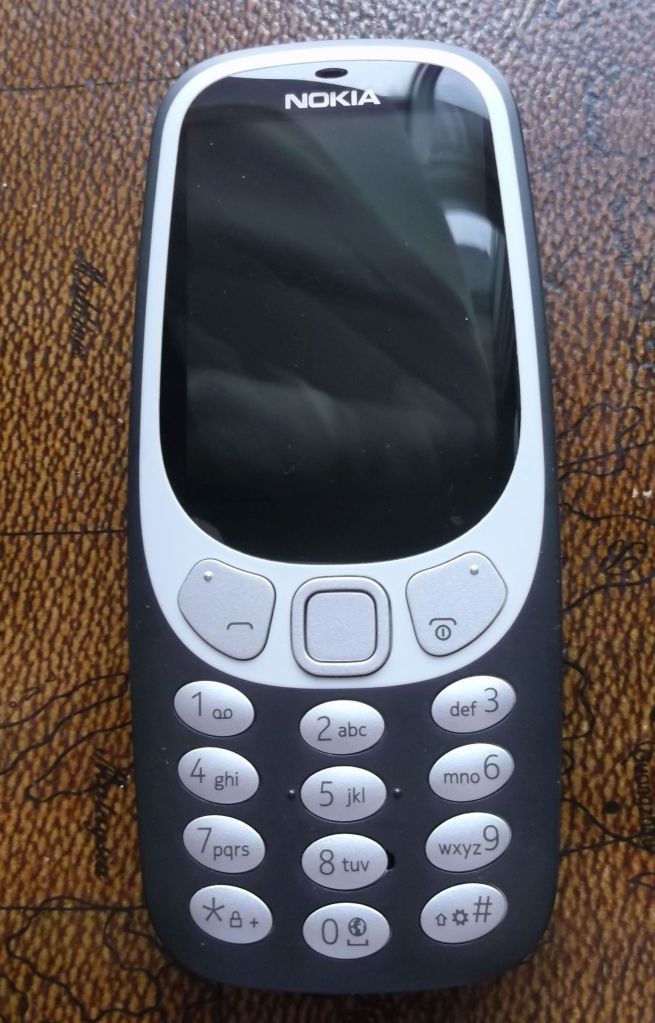
It’s been about three months since I started saving for a new mobile phone so that means I’m halfway through my allotted time to get one. For brevity, I need to be using a new mobile phone by March 31, 2025 since my carrier is sunsetting it’s 3G service in Canada. I only became aware of this discontinuation at the beginning of October 2024 so it’s been a learning experience since then. I knew very little about the mobile space. I got my first mobile phone this summer – a Nokia 3310 (2017) so that should give you some indication as to what knowledge I brought into the situation.
I’ve spent the last three months learning about mobile phones, carriers, contracts, and just the whole mileu around smartphones so I thought I would write about some conclusions I’ve arrived at.
I think the smartphone market has reached it’s mature stage. There is still innovation but nothing currently that I would personally consider technologically impactful. What would I consider impactful? Take for example the switch from CRT resolutions to FHD sets. There you have a very noticeable real world difference between two technologies. Put a common CRT set vs. a common 1080p TV playing the same content and you will see the change. Or a more resonant example when Apple introduced the Iphone in 2007. At the time there was a marked difference between then QWERTY/Split screen phones on the market and the all touch interface of the Iphone.
Right now manufacturers of smartphones are touting AI as the next technologically impactful innovation. And it very well may eventually come to pass but as it currently stands all the uses for AI in smartphones are of no use to me and are what I would consider shoehorned into the phones. If I had to guess I would say that new battery technology is the next innovation in the mobile space. Having a battery that lasts for weeks without having to charge or takes minutes instead of hours to charge (without wearing the longevity of the battery). Batteries that keep their capacity for 10 years. Something along those lines I think is more likely to be the next technological catalyst that propels phones forward over something like AI. Time will tell of course but it’s fun to speculate.
Another thing I noticed is that it’s hard to get good real world information about smartphones. As it stands the market for smartphones reminds me of the fashion industry. You make the new phone, create the demand for it, push it out and move on to the next one. There is a thin veneer of legitimacy over the small army of salesmen because they call themselves Youtubers, Influencers or Celebrities (all really just are manipulators). Once the product is sold it disseminates through social media channels like Facebook, Instagram, Tiktok, Twitter and the like. The end buyers then reinforce the sales pitch with their confirmation bias. Sure this new phone I bought it the newest great thing or I wouldn’t have bought it duh!
I realized this as I tried to process the differences in smartphone generations as I evaluate what to buy. I don’t have any preference or brand loyalty so I was just looking to find performance differences in real world application. You can find hundreds of reviews on the New Pixel 9 Pro but only a handful comparing a Pixel 6 Pro with a Pixel 9 Pro. Not hardware benchtest videos where performance is translated into a score and compared to another. I mean real world tests like how much time it takes to open an app, how responsive it is, how the screen looks streaming media, how the different pictures look taken from their cameras, etc. Of course if you’re trying to run the latest games or hardware intensive programs to edit photos or process videos you’ll notice a difference. But for the majority of end users? They will not notice a remarkable difference.
What I ended up finding is that there just isn’t a huge difference between phone generations anymore. Phones in the Samsung S20 line or Pixel 6 line still work fine today in 2024. Even a newly released $150 phone like the Motorola G (2024) does about 90% of the things flagship releases like the $1800 S24 Ultra or a $1400 Pixel 9 Pro do. It might not look as nice or be as fast but the technological gap between devices has been all but bridged. The gap certainty is not worth the price difference being charged between devices at least for me.




 CatsGamesWhatever